
Can Red Light Therapy Help You Sleep Better?
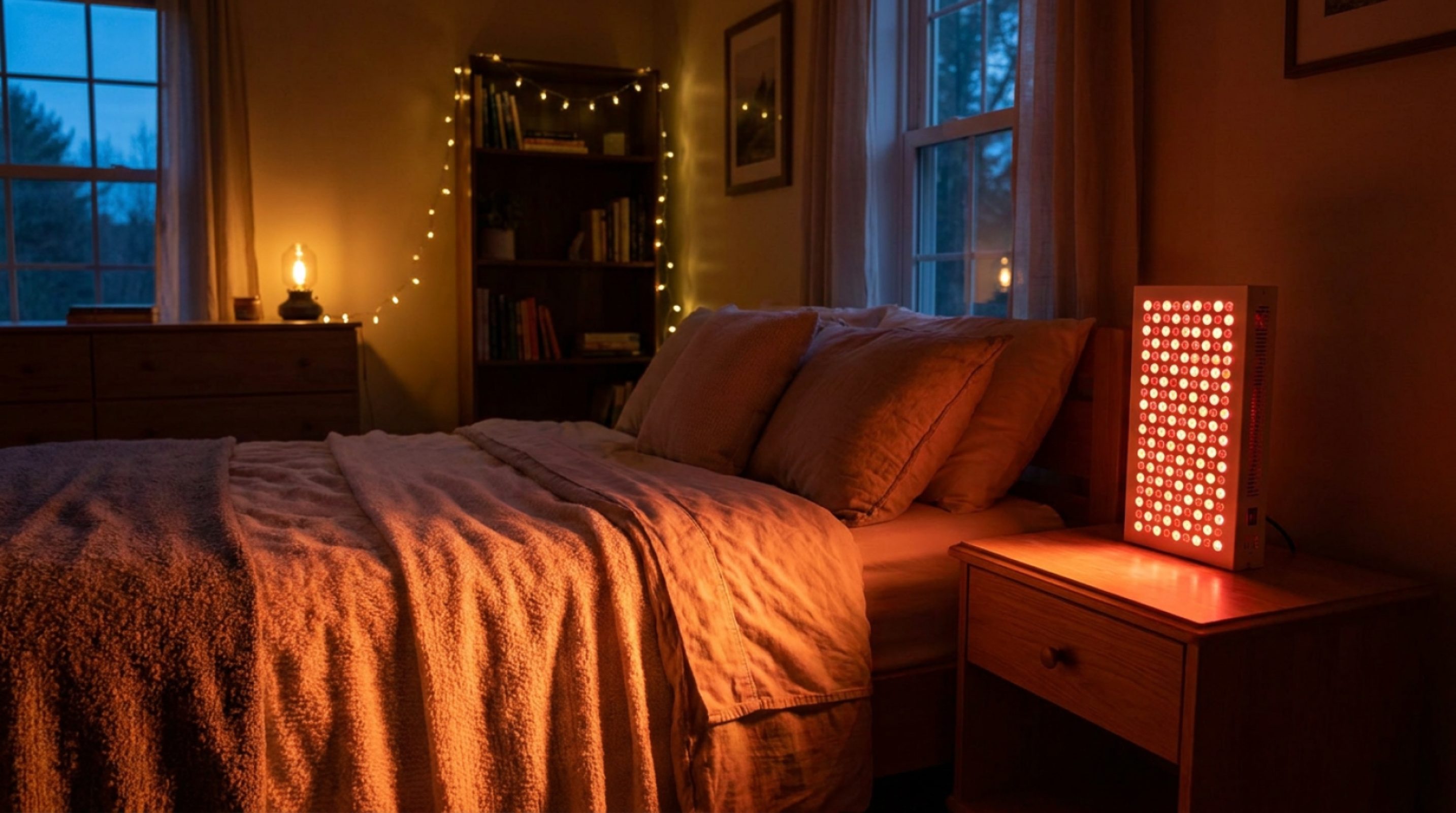
Struggling to wind down at night? Some people use red light therapy as part of an evening routine to help support better sleep.
Why Light Color Matters for Sleep
Your body's internal clock is sensitive to light — especially blue light, which can suppress melatonin (the hormone that signals it's time to sleep) and make it harder to wind down. Red light sits at the opposite end of the visible spectrum and doesn't appear to disrupt melatonin production the same way, which is why it's commonly used in the evening instead of screens or bright white light.
How Red Light Therapy May Support Sleep
- Doesn't interfere with your body's natural melatonin production the way blue light does
- Can be part of a calming, screen-free wind-down routine
- May help ease physical tension that keeps you awake, when used for relaxation before bed
It's worth noting: red light therapy isn't a proven treatment for diagnosed sleep disorders like insomnia or sleep apnea — for those, talk to a doctor.
Building It Into an Evening Routine
- Use your device 20–30 minutes before bed, in place of scrolling on your phone
- Dim other lights in the room at the same time
- Keep the routine consistent — your body responds to regular cues over time
- Combine with other good sleep habits: consistent bedtime, cooler room, less caffeine late in the day
The Bottom Line
Red light therapy won't fix every sleep problem, but as part of a consistent wind-down routine, it's a reasonable, low-risk swap for blue-light screen time before bed. See our red light therapy panels.
